All week we will be working on our Thinkcerca on Fossils!!!
Our next unit is Geology and Geologic History of the Earth!!!
Tuesday, October 9, 2018

Sunday, September 30, 2018
Science class Oct 1-5 Sputnik week!!!!!
Monday/ Tuesday - Start with a Skyward review assignment. As a group we will model the moon cycles,
eclipses, and neap/spring tides using the lamps and the golf balls. Students will then
be asked to create a model of the moon cycles using oreo cookies. Students will be
required to take a picture of the model and email it to smoore2@galesburg205.org
Students will be given a homework worksheet which needs to be completed before
the test on Friday.
eclipses, and neap/spring tides using the lamps and the golf balls. Students will then
be asked to create a model of the moon cycles using oreo cookies. Students will be
required to take a picture of the model and email it to smoore2@galesburg205.org
Students will be given a homework worksheet which needs to be completed before
the test on Friday.
Wednesday/Thursday - Start with the same review start from last class. Students will be asked to take
notes (paper or computer) about the space race and the mission to the moon. A guided
note sheet will be available for all students to access,Students will then look at what the
current ISS looks like with a 3d tour on the internet. We will discuss the future of space
travel and create a t chart with pros and cons for the future space endeavors. If we have
time we will play a review Kahoot game.
notes (paper or computer) about the space race and the mission to the moon. A guided
note sheet will be available for all students to access,Students will then look at what the
current ISS looks like with a 3d tour on the internet. We will discuss the future of space
travel and create a t chart with pros and cons for the future space endeavors. If we have
time we will play a review Kahoot game.
All Classes Friday - Astronomy final test on skyward.
Tuesday/ Wednesday Start Thinkcerca on Fossils.
Thursday/ Friday continue and finish thinkcerca
Sunday, September 23, 2018
Revamped lesson because of shorten classes! 9-24 to 9-28
Monday, Sept 24th All classes complete scientific notation worksheet on walking planets
model. Students will go outside and participate in a walking model of the solar system.
Homework is a skyward review assignment.
model. Students will go outside and participate in a walking model of the solar system.
Homework is a skyward review assignment.
Tuesday/ Wednesday - Students will research moon cycles, year cycles and the
month/day cycles. Students will create clay models of the Earth, Moon, Sun
relationship.Tables will be assigned one of the cycles. They will be required to
teach another group using their model. Two question - Why do we have time?
Why do we see a different shape of the moon every night? Students will create
two questions that they want the learners to answer after their explanation.
Students will be assigned a moon cycle chart to complete, due at our next class.
If time we will watch one of our short moon videos.
month/day cycles. Students will create clay models of the Earth, Moon, Sun
relationship.Tables will be assigned one of the cycles. They will be required to
teach another group using their model. Two question - Why do we have time?
Why do we see a different shape of the moon every night? Students will create
two questions that they want the learners to answer after their explanation.
Students will be assigned a moon cycle chart to complete, due at our next class.
If time we will watch one of our short moon videos.
Thursday/ Friday - Review Start questions 27-28. Students will take notes on moon
cycles, eclipses, and tides. We will throw the model of the moon around the room
and simulate our discussion with human models. We will finish with creating the
Sunday, September 16, 2018
Earth Science Class Mrs. Moore Lesson Plans Sept. 17th - 28th
NGSS
MS-ESS1-1
Develop and use a model of the Earth-sun moon system to describe the cyclic patterns
of lunar phases, eclipses of the sun and moon, and seasons.
of lunar phases, eclipses of the sun and moon, and seasons.
MS-ESS1-2
Develop and use a model to describe the role of gravity in the motions within galaxies
and solar system
and solar system
MS-ESS1-3
Analyze and interpret data to determine scale properties of objects in the solar system
Assessment questions on essential skills earth science. These questions pertain to the
lessons for the two weeks.
lessons for the two weeks.
Students will create a scale model of the solar system (planets size, motion, and distance)
Create a diagram to illustrate how the Earth, Sun, and moon move in relation to each other.
Use arrows for direction of movement, label the diagram and include a detailed written
description that includes the terms rotation, revolution, orbit, axis, day, year, and gravity.
Create a diagram to illustrate the phases of the moon. Include all moon phases, the Earth,
and the sun. Label the diagram.
Analyze this diagram and answer the questions that follow:

each of the four Earth models.
Why does it rarely snow in Mexico? Explain in detail.
Why does the northern hemisphere have summer at the same time the southern hemisphere has winter. Explain in detail how this occurs.
Why is it generally coldest near the north and south poles? Explain in detail.
Why does the northern hemisphere have summer at the same time the southern hemisphere has winter. Explain in detail how this occurs.
Why is it generally coldest near the north and south poles? Explain in detail.
Day 1 Review Skyward (RS17-18)Students will have class time to finish the planets to scale
poster. Students will self assess their work with rubric. Students will research online current
data of planets. Assignment is due at the next class. If we have time we will watch one of our
short moon videos.
poster. Students will self assess their work with rubric. Students will research online current
data of planets. Assignment is due at the next class. If we have time we will watch one of our
short moon videos.
Day 2 Review Skyward (RS19-20) Collect research material on the planets. We will discuss
modeling of the solar system. We will complete walking model of the solar system.
(outside- keep an eye on the weather). We will discuss moon cycles. Students will create
clay models of the Earth, Moon, Sun relationship. Students will be assigned a moon cycle
chart to complete, due at our next class. If time we will watch one of our short moon videos.
modeling of the solar system. We will complete walking model of the solar system.
(outside- keep an eye on the weather). We will discuss moon cycles. Students will create
clay models of the Earth, Moon, Sun relationship. Students will be assigned a moon cycle
chart to complete, due at our next class. If time we will watch one of our short moon videos.
Day 3 Review Skyward (RS21-24) Turn in the moon cycle chart. Notes on Moon Cycle,
eclipses and tides while throwing the Moon around our classroom. Students will be asked to
create a model of the moon cycle and eclipses using our clay, or golf balls or other approved
materials to explain to younger students why we see different moon phases each night. This
assignment will be due Friday, September 28th. We will also have the lamps in our room to
simulate the moon cycle.
eclipses and tides while throwing the Moon around our classroom. Students will be asked to
create a model of the moon cycle and eclipses using our clay, or golf balls or other approved
materials to explain to younger students why we see different moon phases each night. This
assignment will be due Friday, September 28th. We will also have the lamps in our room to
simulate the moon cycle.
Day 4 Review Skyward (RS25-26) Work day in science class. Students will work on
completing all models correctly. Students will be helping each other with their moon
cycle projects or other missing work in science class. There will be a short reading
assignment with three questions to answer in the last 10 minutes of class.
completing all models correctly. Students will be helping each other with their moon
cycle projects or other missing work in science class. There will be a short reading
assignment with three questions to answer in the last 10 minutes of class.
Day 5- Students will be given the mission to the moon! We will explore why the USA
went to the moon. We will complete an activity - our mission to hit the ceiling and return to
the table safely. Students will create rockets with propulsion. We will again discuss
independent manipulated variables, constants, and controls in experiments.
went to the moon. We will complete an activity - our mission to hit the ceiling and return to
the table safely. Students will create rockets with propulsion. We will again discuss
independent manipulated variables, constants, and controls in experiments.
Day 6 - Astronomy Post test skyward and attempt Assessment 1 questions from
Essential skills.
Essential skills.
Day 7 - Start ThinkCerca. We will start with a simple lesson on astronomy. There is a
reading and 5 multiple questions.
reading and 5 multiple questions.
Monday, September 3, 2018
Earth Science Class Mrs. Moore Lesson Plans Sept. 4th -14th
Period 2,4, and 9 Tuesday, Thursday Monday, Wednesday
Period 3,5, and 10. Wednesday, Friday, Tuesday, Thursday
NGSS
MS-ESS1-1
Develop and use a model of the Earth-sun moon system to describe the cyclic patterns
of lunar phases, eclipses of the sun and moon, and seasons.
of lunar phases, eclipses of the sun and moon, and seasons.
MS-ESS1-2
Develop and use a model to describe the role of gravity in the motions within galaxies
and solar system
and solar system
MS-ESS1-3
Analyze and interpret data to determine scale properties of objects in the
solar system
solar system
Assessment questions on essential skills earth science. These 3 questions pertain
to the lessons for the two weeks.
to the lessons for the two weeks.
- Explain the importance of gravity in our Solar System as it relates to the formation of the Solar System, motion of the sun/Earth/moon system, and tides. Also include how mass affects gravity.
- Students will use the H-R diagram to create an explanation of the life cycle of a star. This can be written in paragraph form or as a visual display (infographic). Students need to identify the stages of stars, the absolute magnitude, size, and temperature of stars. Students need to express the relationships between color and temperature and size and brightness. The following terms need to be used in the explanation; protostar, nebula, main sequence, giant (super, hyper, blue, red), supernova, black hole, white dwarf, and neutron star.
- Students will create a scale model of the solar system
Day 1
Start with a skyward review. Big Bang demonstration with dots and look at the
formula for gravity. SImulation for gravity. https://phet.colorado.edu/sims/html/gravity-force-lab/latest/gravity-force-lab_en.html
formula for gravity. SImulation for gravity. https://phet.colorado.edu/sims/html/gravity-force-lab/latest/gravity-force-lab_en.html
SImulation for gravity on planets.
Review Fusion and Fission and how the Universe started and light is formed.
We will review our hand motions for fusion and fission. Students will create
an concept map to answer the question “Where is the Earth in the Universe?”
Introduce terms; cluster, local group, galaxy, milky way, solar system, and binary star
system. Students will watch a video on scale proportions of items in the universe.
https://www.youtube.com/watch?time_continue=18&v=HEheh1BH34Q
We will review our hand motions for fusion and fission. Students will create
an concept map to answer the question “Where is the Earth in the Universe?”
Introduce terms; cluster, local group, galaxy, milky way, solar system, and binary star
system. Students will watch a video on scale proportions of items in the universe.
https://www.youtube.com/watch?time_continue=18&v=HEheh1BH34Q
We will end with the life cycle of a star simple diagram. The following terms need
to be used in the explanation; protostar, nebula, main sequence, giant (super, hyper, blue, red),
supernova, black hole, white dwarf, and neutron star.
to be used in the explanation; protostar, nebula, main sequence, giant (super, hyper, blue, red),
supernova, black hole, white dwarf, and neutron star.
Homework is due Friday -
https://docs.google.com/document/d/1qHGgG3TfqQYwbl7smYgLK9sRRD3_GYvECgVmCPtPzLo/edit
https://docs.google.com/document/d/1qHGgG3TfqQYwbl7smYgLK9sRRD3_GYvECgVmCPtPzLo/edit
Day 2
Review assignment on skyward. Review our location in the Universe and the life cycle
of a star. Students will research images of the life cycle of a star in class (10 minutes).
Students will be given a class assignment to explain the life cycle of a star. Students
will use the H-R diagram to create an explanation of the life cycle of a star. This can be
written in paragraph form or as a visual display (infographic). Students need to identify
the stages of stars, the absolute magnitude, size, and temperature of stars. Students need
to express the relationships between color and temperature and size and brightness.
The following terms need to be used in the explanation; protostar, nebula, main sequence,
giant (super, hyper, blue, red), supernova, black hole, white dwarf, and neutron star. This
assignment will be due by Monday September 10th.
of a star. Students will research images of the life cycle of a star in class (10 minutes).
Students will be given a class assignment to explain the life cycle of a star. Students
will use the H-R diagram to create an explanation of the life cycle of a star. This can be
written in paragraph form or as a visual display (infographic). Students need to identify
the stages of stars, the absolute magnitude, size, and temperature of stars. Students need
to express the relationships between color and temperature and size and brightness.
The following terms need to be used in the explanation; protostar, nebula, main sequence,
giant (super, hyper, blue, red), supernova, black hole, white dwarf, and neutron star. This
assignment will be due by Monday September 10th.
Day 3 - Turn in any life cycle of a star explanations. 10 points
Math day - We will look at the formula of gravity again. We will look at scientific notation and
understanding how to add, subtract, multiply, and divide. Students will use Astronomical units
to measure our solar system. Students will create a to scale model of the distance between
planets in our solar system. This will be completed in class together. We will review how to
create a scale model. Students will start on their model of the planets to scale assignment.
This project is due by Friday, September 14th.
understanding how to add, subtract, multiply, and divide. Students will use Astronomical units
to measure our solar system. Students will create a to scale model of the distance between
planets in our solar system. This will be completed in class together. We will review how to
create a scale model. Students will start on their model of the planets to scale assignment.
This project is due by Friday, September 14th.
Day 4 - Students will continue to work on the planets to scale model.
Friday September 14th both History and Earth Science class will visit Carl Sandburg College.
Monday, August 27, 2018
Earth Science Class Mrs. Moore Lesson Plans August 28th to Sept. 8th
Period 2,4, and 9 Tuesday, Thursday
Period 3,5, and 10. Wednesday, Friday
Tuesday/ Wednesday August 28th and 29th - Day 1
- Students will start with an astronomy pretest on skyward.This is a no count assignment but will be used to show growth in knowledge.
- While students are taking the pretest, Mrs. Moore will call students up to thefront desk to light the burner.
3. Homework assignment is to read the article and answer the following
questions on skyward.
https://www.esa.int/esaKIDSen/SEMSZ5WJD1E_OurUniverse_0.html
Questions on skyward are called Universe article questions.
https://www.esa.int/esaKIDSen/SEMSZ5WJD1E_OurUniverse_0.html
Questions on skyward are called Universe article questions.
- Please do not forget to turn in your science safety contract.Make sure you read the contract before you sign it.
- If time allows we may start our videos.
Thursday/ Friday August 30th and 31st - Day 2
1. We will watch the two videos from my web page regarding
start of the Universe today. We will create a question board after
watching the videos. We will pick several questions to research on
our chromebooks. We will share our findings.
2. Review difference between the terms astronomy and astrology and rotation and revolution.
3. Discussion on the force of gravity in our universe. Students will see
the formula for gravity and complete an interactivity

4. Students will participate in a classroom demonstration of the beginning of the Universe. All students will be given a circle to represent density and size of an abject in space. We will start in a singular and explode outward. The students will visually see how large dense objects capture other objects close to them. We will talk about black holes and spaghettification.
5. Notes will be given on the 2 pieces of evidence scientists use to support the
Big Bang Theory. Hopefully this information will be a review from our research
earlier in class.
earlier in class.
6. Homework is a worksheet of terms we will use in our study of astronomy. Homework is due Friday September 7th! I will accept it any day before but will not accept it after September 7th!! A paper copy will be given in class and extra copies will be offered everyday we have class. A copy is attached to the web page.
Sunday, May 13, 2018
Earth Science Class Mrs. Moore Lesson Plans May 14th to May 18th
Earth Science Class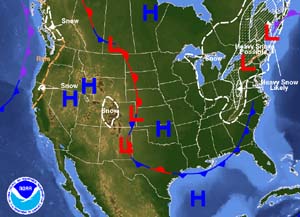
Monday, Wednesday, Friday
Period 3,5, and 10
Tuesday and Thursday
Period 2,4, and 9
Essential question - What causes weather and climates?
Friday/ Monday- Start with a video that reviews our essential question. https://www.youtube.com/watch?v=YbAWny7FV3w https://www.youtube.com/watch?v=_fcXL61NZS0&list=PLoPqPVJf0U4KZvoLH685P3JE0bKUWFQ52 Storm day!!!! Students will make models of thunderstorms, lightning, the two ways we think tornadoes are formed, and we will look at the development of a hurricane. We will have several videos to look at before we create our models. https://www.youtube.com/watch?v=QVZExLO0MWA&index=2&list=PLoPqPVJf0U4KZvoLH685P3JE0bKUWFQ52 Students will have to visually model only one of the items listed to display in class. Reminder to all that homework is to find or collect the high/low temperature, barometric pressure, relative humidity, and precipitation amounts for Saturday and Sunday at the same time each day. This information will be collected next week.
Tuesday/ Wednesday - Hurricane Day!! We will diagram and explain where when and why hurricanes form. Students will look at satellite images of different hurricanes and discuss what causes the difference between the storms. We will use the NOAA interactive to work through the development of a hurricane and see the pieces that cause the most damage to humans. Students will create a plan for safety if they lived in a hurricane prone area. We will discuss the current data of numbers of hurricanes and infer the many variables that influence the number changes. Students will be given a short skyward quiz at the end of the lesson.
Thursday/ Friday - We will start with a skyward assignment, the post test of the weather and climate unit. Second, students will be asked to show knowledge that completely answers our Essential question - What causes weather and climates? Students will be given a rubric to grade their own answers. The students may draw diagrams, models, and list data that will help show their knowledge on the subject. This is the final test for our unit on Weather and Climate. The final score will be 10 points.
Subscribe to:
Posts (Atom)
-
Monday, Sept 24th All classes complete scientific notation worksheet on walking planets model. Students will go outside and participate...
-
August 26th - 30th and Sept 3rd - 6th Weekly reading - Week 2 https://www.nationalgeographic.com/environment/global-warming/global-w...
-
Mrs. Moore Lesson Plans March 18th -21st Per iod 2,4, and 9 Mon. Wed. Fri Period 3,5, and 10 Tues. Wed. Thurs Illinois State S...
